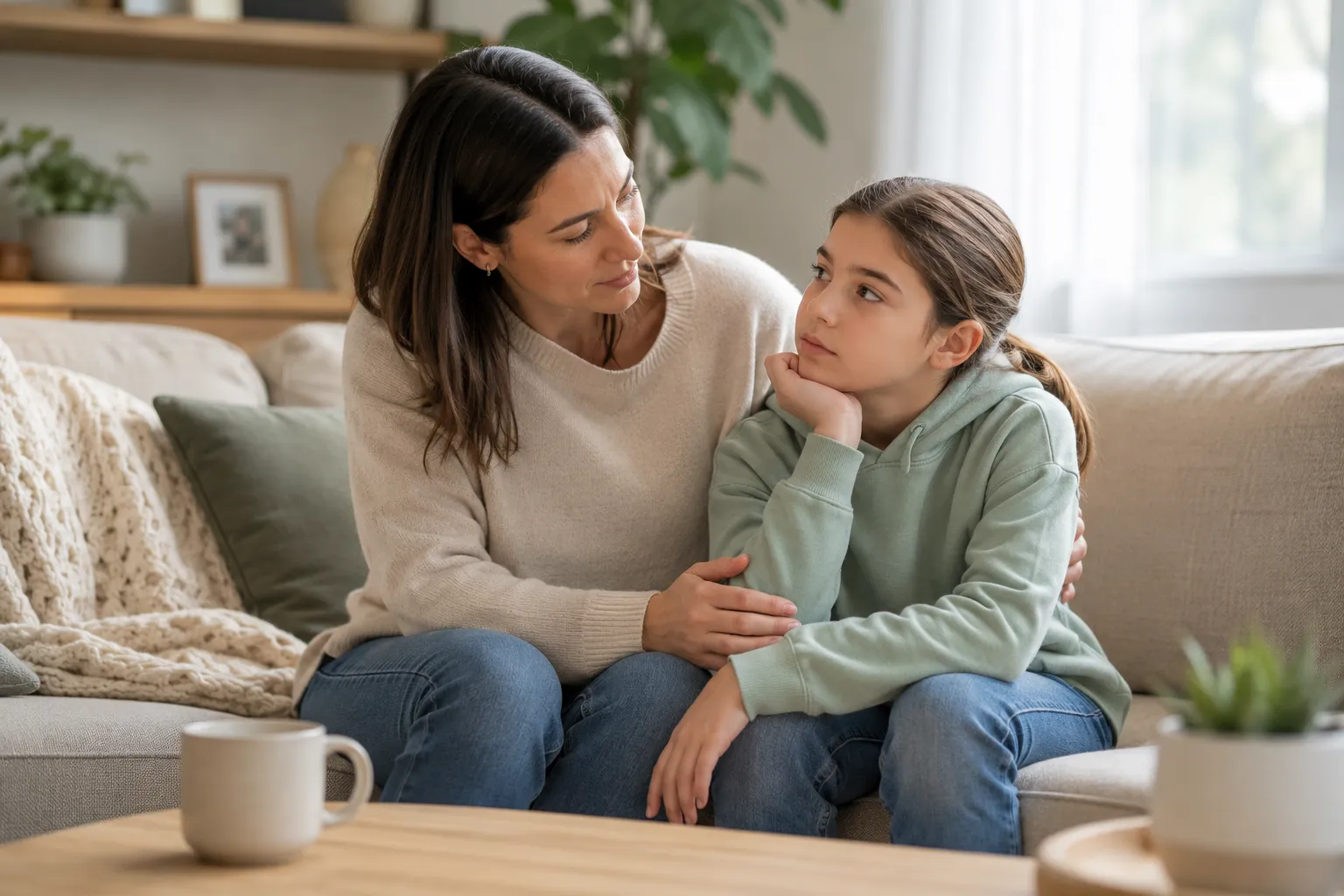
Anxious child help is most effective when parents understand what worry looks like in real life. It may appear as stomachaches, anger, clinginess, perfectionism, or refusal. A child may not say they feel anxious. They may simply avoid the thing that scares them. Parents need practical ways to respond without shaming or over-rescuing. The goal is gentle guidance, not instant bravery. Your child needs to feel safe enough to try. The Calm Parent System for Childhood Anxiety gives families a clearer structure. It helps turn emotional confusion into supportive next steps.
Before you can support anxiety, you need to notice its pattern. Some children worry before transitions. Others worry after social conflict. Some become tense when they feel watched or rushed. Observation helps you respond to the actual trigger. It also keeps you from assuming your child is being difficult. A simple anxious child checklist can make patterns easier to see. Write down the time, trigger, behavior, and recovery. Notice what helped. Notice what made things harder. This information becomes your parenting map.
School refusal can feel frightening for parents. You may worry about academics, attendance, and long-term habits. Your child may feel trapped between fear and expectation. A calm plan begins with connection. Validate the distress first. Then choose the smallest next action. That might mean getting dressed, walking to the car, or speaking with a teacher. Helpful child anxiety coping tools support this step-by-step process. The Calm Parent System for Childhood Anxiety helps parents stay steady when avoidance feels intense.
A worried child cannot always think clearly. Their body may feel louder than your explanation. This is why emotional safety comes before advice. You can sit nearby, breathe slowly, use fewer words. Your presence becomes the first intervention. Once your child settles, problem-solving becomes possible. Parents can use gentle anxiety response language to lower pressure. This approach respects the feeling without surrendering to fear. It teaches children that calm can return after emotional intensity.
Social anxiety often hides behind irritability or withdrawal. Your child may avoid parties, calls, sports, or group work. They might fear embarrassment more than the event itself. Parents can help by preparing without over-rehearsing. Talk through one likely challenge. Choose one brave action. Keep the expectation clear and small. Strong child confidence support grows through repeated experiences of trying. The goal is not instant social ease. It is helping your child learn that discomfort can be survived.
Anxiety can quietly reorganize the household. Siblings may feel ignored. Parents may feel divided. Family plans may shrink around one child’s worry. A supportive plan should consider everyone. Create routines that help the anxious child without making anxiety the family leader. Use family calming routines so emotional support feels shared. Keep sibling needs visible. Protect parent rest where possible. The home should feel compassionate, not anxiety-controlled. This balance helps every family member feel more secure.
Consistency makes support feel trustworthy. Your child learns what to expect from you. You learn how to respond without starting from zero each time. The Calm Parent System for Childhood Anxiety helps keep the process organized. Parents can combine calm parenting strategies with supportive parenting resources. That makes the support easier to repeat. Small daily practices matter. They build emotional memory. Over time, your child begins internalizing the calm you model.


Leave a comment