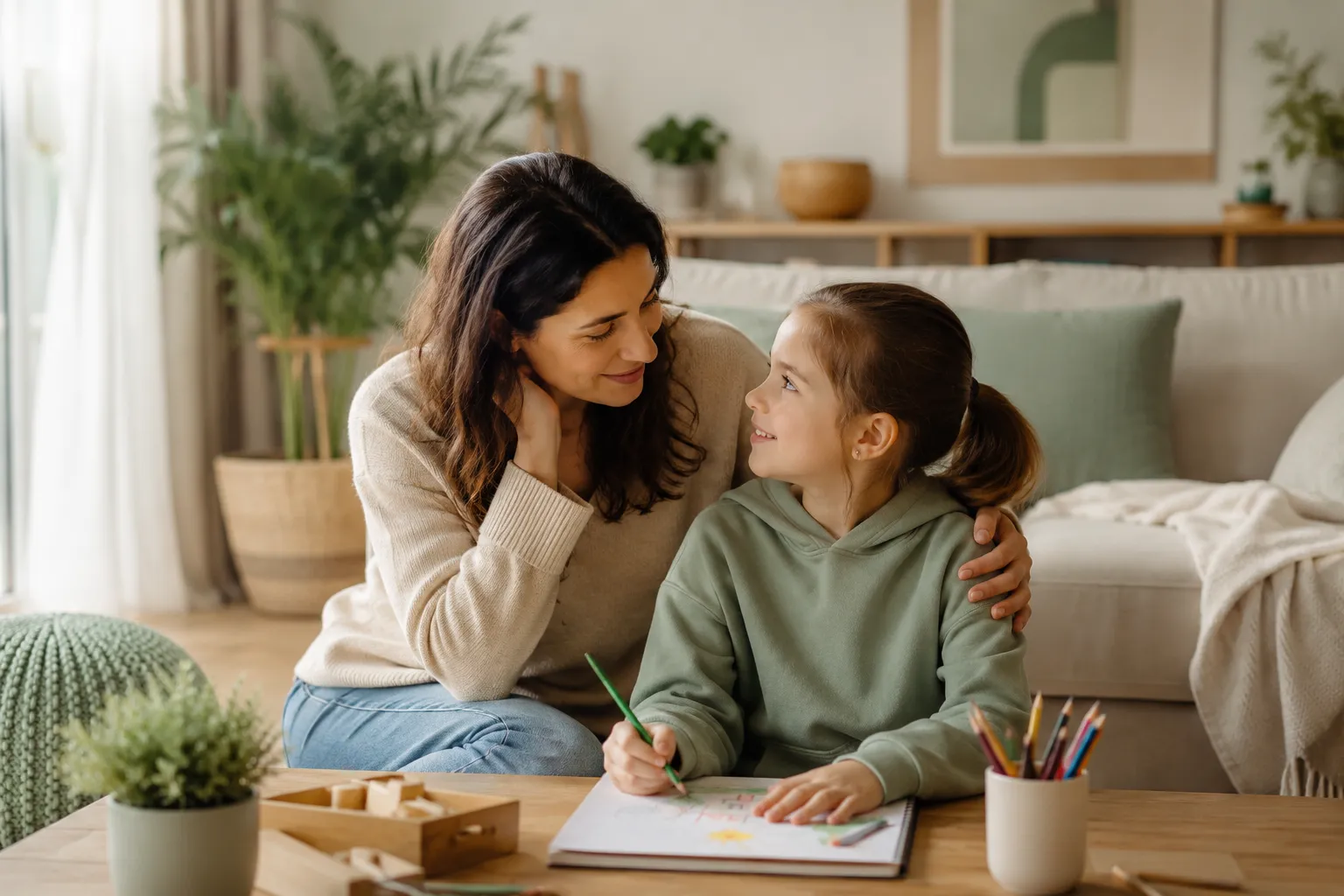
Childhood anxiety support matters most when worry starts shaping your child’s everyday choices. Your child may avoid school, cling at bedtime, or melt down before simple changes. Parents often want to help, yet panic can make every response feel heavier. The goal is not to erase every fear.
It is to create steady reactions that help your child feel safe. With the right structure, home becomes more predictable. Your words become more reassuring. Small routines begin doing important emotional work. The Calm Parent System for Childhood Anxiety gives families a practical place to begin. It turns scattered concern into daily support.
Anxiety often grows when children feel rushed, judged, or misunderstood. Home can become the first place where worry slows down. Parents do not need perfect scripts. They need repeatable habits that feel realistic. A steady voice helps more than a perfect answer.
Simple routines also teach the body what safety feels like. This is where calm parenting strategies become useful. They help you respond before frustration takes over. The Calm Parent System for Childhood Anxiety supports that shift. Your child begins learning that big feelings can be handled.
Worried children often cannot process long explanations. Their nervous system wants safety first. Clear words work better than lectures. You can say that fear feels real, but it does not need to lead. This keeps your child from feeling dismissed. It also keeps you from joining the panic.
Strong support uses warmth, structure, and repetition. Parents can rely on child anxiety coping tools when emotions rise quickly. These tools turn tense moments into teachable ones. Over time, your child hears confidence in your response.
Daily rhythm gives anxious children something solid to hold. Morning routines reduce decision stress. Bedtime rituals help the body prepare for rest. After-school resets create space before homework or family demands. These moments do not need to be complicated.
They need to happen often enough to feel dependable. Parents can build family calming routines around transitions. A visual plan can help younger children. Older children may prefer a short written checklist. The best routine lowers tension without turning home into a project.
Big feelings often test every parenting skill at once. Your child may cry, argue, freeze, or refuse. These reactions can look defiant from the outside. Inside, they often reflect overload. A supportive parent response begins with regulation.
You pause before correcting. You lower your voice before giving choices. You name the feeling without making it the whole story. Helpful emotional regulation for kids starts with co-regulation from adults. The Calm Parent System for Childhood Anxiety helps parents practice that calmer pattern.
Tracking does not need to feel clinical. It simply helps you notice patterns. You can record triggers, body cues, sleep changes, and recovery time. This gives you better information than memory alone. It also helps you separate occasional worry from repeated distress.
A clear anxious child checklist can guide your observations. Parents can also note which responses helped. This builds confidence during future moments. With enough patterns, support becomes more precise. Your child feels seen because your response matches the real situation.
Lasting support grows through repetition, not pressure. Children need time to trust new emotional habits. Parents need room to learn without shame. A calmer home does not mean every day feels easy. It means hard days have a plan.
You can use supportive parenting resources to keep that plan visible. You can add childhood worry support when school, friendships, or sleep become harder. Gentle progress still counts. The real win is helping your child believe fear can be faced.
Families often improve when they stop treating anxiety as a battle. Your child needs connection, skills, and patient structure. That is why kids stress management, parent child connection, and a gentle anxiety response work together.
You can strengthen calm home routines while building child confidence support. This approach feels practical because it meets real family life. It gives parents something to do besides worry. It gives children something to practice besides avoidance. Calm becomes a family skill.

Leave a comment